

Save hours on social, every day.
Automate moderation and replies, schedule posts, and pull reports - all in one tool.
Table of Contents
- The best social media scheduling tools in 2026, at a glance
- The best social media scheduling tools for teams, reviewed
- What a social media scheduler can actually auto-publish (and what still needs your thumb)
- The free plans, honestly sorted
- What a five-person team actually pays
- What happens when a scheduled post fails
- How to choose a social media scheduler that scales with your team
- Social media scheduling tools: your questions, answered
Nobody grew their audience by logging into six apps before lunch. But that’s where most of the week goes: copying the same caption into TikTok, resizing it for LinkedIn, remembering that the Instagram carousel has to go up at 6pm, and then missing it anyway – because you were in a meeting.
That’s what a social media scheduler is for. Queue the work once, let it go out on time, and get your afternoon back.
We tested and priced 20 social media scheduling tools for this guide, from free apps to enterprise social media scheduling software. Every price below came off the vendor’s own pricing page or help centre – not from a press release – and we’ve flagged the tools whose published prices contradict themselves. There’s also a section nobody else seems willing to write: what a scheduler physically cannot publish for you, no matter which one you pay for.
- The best social media scheduling tools in 2026, at a glance
- The best social media scheduling tools for teams, reviewed
- What a social media scheduler can actually auto-publish (and what still needs your thumb)
- The free plans, honestly sorted
- What a five-person team actually pays
- What happens when a scheduled post fails
- How to choose a social media scheduler that scales with your team
- Social media scheduling tools: your questions, answered
Key Takeaways
- No scheduling tool on earth can auto-publish an Instagram Story with a sticker. Link, poll, question, countdown, location, music – Meta’s API forbids all of them, for everyone. Any tool that appears to schedule those is sending a push notification to your phone at the scheduled minute and asking you to finish the post by hand.
- Nobody can post to a Facebook Group any more. Meta removed the Groups API entirely on 22 April 2024, so a tool still advertising Group publishing is describing something that stopped working two years ago.
- Instagram’s daily publishing ceiling is genuinely unknown. One page of Meta’s own documentation says 100 API-published posts per rolling 24 hours in one section and 50 in another. Later tells its users 50, Hootsuite says 25, Iconosquare caps at 25 by policy. The only live answer comes from Instagram’s own content publishing limit endpoint.
- Half these tools won’t tell you what happens when a post fails. Ten of the 20 publish nothing about retries, failure alerts or requeuing, and Statusbrew is the only one that documents automatic retry. If a 9am launch post matters, ask during the trial – it will never be on a pricing page.
- The billing unit decides your invoice, not the feature list. Five people on ten channels runs from $120 a month on Buffer to $995 on Sprout Social Standard, and that eight-fold gap is almost entirely about whether the vendor counts people, channels, brands, workspaces or nothing at all.
- Profile caps bite before user caps – always. Agorapulse stops at 10 social profiles on every self-serve tier, Sprout Social Standard at 5 and Hootsuite Standard at 10. Check the ceiling, not the floor.
The best social media scheduling tools in 2026, at a glance
Here’s the whole list before the detail, because you came here for tools – not for a definition of the word “scheduling”.
| # | Tool | Best for | Starts at | How it bills you | Permanent free plan |
|---|---|---|---|---|---|
| 1 | NapoleonCat | Teams who moderate as much as they publish | from $89/mo (2 users, 5 profiles) | Per plan, with users included | No, 14-day trial, no card |
| 2 | Hootsuite | Large social teams that need control | $99 per user/mo, billed annually | Per seat, none included | No, 14-day trial, no card |
| 3 | Buffer | Solo marketers and a handful of channels | $6 per channel/mo, $5 billed yearly | Per channel | Yes: 3 channels, 10 queued posts, 1 user |
| 4 | Later | Instagram and TikTok-first visual planning | $18.75/mo billed yearly | Per plan, capped by “social sets” | No, 14-day trial |
| 5 | Sprout Social | Proving social’s value to the wider business | $79 per seat/mo annually, $99 monthly | Per seat, none included | No, 30-day trial, no card |
| 6 | Agorapulse | Inbox-led management with ROI reporting | $79 per user/mo annually, $99 monthly | Per user | No, not since 6 July 2026 |
| 7 | SocialBee | Recycling evergreen content forever | $24.20/mo billed annually, $29 monthly | Per plan, 1 user hard cap | No, 14-day trial, no card |
| 8 | Metricool | Cheap analytics plus scheduling, many brands | from $20/mo billed annually, $25 monthly | Per brand | Yes: 1 brand, 20 posts/mo, no LinkedIn or X |
| 9 | Planable | Client and stakeholder approvals | $33 per workspace/mo billed yearly, $39 monthly | Per workspace, unlimited users | Yes: first 50 posts, no time limit |
| 10 | Sendible | Agencies who refuse to pay per seat | $29.75/mo billed yearly, $35 monthly | Per plan and workspace, unlimited users | No, 14-day trial, no card |
| 11 | CoSchedule | Social inside a wider marketing calendar | $19 per user/mo billed annually, $29 monthly | Per seat, max 3 | Yes: 1 profile, 15 posts, 1 user |
| 12 | Loomly | Small in-house teams who want post guidance | $49/mo billed yearly, $65 monthly | Per plan (12 accounts, 3 users) | Limited free plan, not on the pricing page |
| 13 | Statusbrew | Moderation at volume, with real audit trails | $69/mo billed annually, $89 monthly | Per plan, then per user and per profile | No, 14-day trial, no card |
| 14 | Zoho Social | Teams already living inside Zoho | $10/mo billed annually, $15 monthly | Per brand and per member | Yes: 1 brand, 6 channels, 1 member |
| 15 | Publer | Paying for exactly the accounts you run | from $5/mo per the vendor’s help centre | Per social account and per member | Yes: 3 accounts, 10 posts each, 1 user |
| 16 | Pallyy | Good-looking Instagram planning on a budget | $15/mo monthly, $140/yr | Per plan, metered by “social sets” | Yes: 1 account, 15 posts/mo |
| 17 | Iconosquare | Instagram and TikTok analytics depth | €33/mo billed yearly | Per profile band, plus per user | Yes: 2 profiles, 10 posts/mo each |
| 18 | MeetEdgar | Evergreen queues without per-seat costs | $29.99/mo, or $299/yr | Per plan, up to 20 team members free | No, 30-day trial, card required |
| 19 | HubSpot | Attributing social posts to pipeline | $800/mo (Marketing Hub Professional) | Per seat above an included block of 3 | Free tools exist, but no social publishing |
| 20 | ContentStudio | Agencies wanting flat, unlimited seats | $19/mo billed annually, $29 monthly | Per plan, add-ons per account and user | No, 7-day trial, no card |
Two notes before you scan that table twice. Prices are list prices, in the vendor’s own currency – and several tools run promotions that make the headline look cheaper than the standing rate. And billing unit matters more than the entry price – there’s a section further down that works out what five people on ten channels actually pay.
The best social media scheduling tools for teams, reviewed
1. NapoleonCat
Best for: teams whose comment section is as much work as the content calendar.
Most schedulers stop caring the moment your post goes live. That’s usually the exact moment the work starts – because now there are 40 comments and three of them are angry.
NapoleonCat schedules to Facebook, Instagram, TikTok, LinkedIn Company Pages, YouTube and Google My Business from one calendar, and publishes to X as well. Then Auto-moderation and the Social Inbox take the replies, so nobody sits refreshing notifications. That is the part most schedulers leave you to handle alone.
On formats: images and video everywhere, Facebook Reels and up to 30 images in one post, Instagram carousels and Reels, TikTok video, and Google My Business What’s New, Event and Offer posts with a button. You can add the first comment to an Instagram post at the moment you schedule it, and links carry UTM tags.
The bit teams notice on the invoice: two users and five profile slots come included from the entry plan, so the second person doesn’t double what you pay. Ad comment moderation covers Facebook, Instagram, TikTok and YouTube, which is unusual at this price and the reason a lot of people who came for the Publisher end up staying for the moderation.
The numbers: from $89/mo for 2 users and 5 profiles. Unlimited post scheduling on every plan. 14 days free, no credit card. EU-based and EU-hosted, if that matters to your legal team (it usually does).
Capacity is sold in published steps rather than one seat at a time, so a bigger team has a price you can look up instead of multiply:
| Users / profiles | Standard | Pro | Expert |
|---|---|---|---|
| 2 / 5 | $89/mo | $109/mo | $139/mo |
| 5 / 10 | $149/mo | $189/mo | $249/mo |
| 10 / 20 | $249/mo | $299/mo | $369/mo |
| 15 / 40 | $349/mo | $419/mo | $519/mo |
| 20 / 60 | $499/mo | $619/mo | $799/mo |
That works out at $24.90 a month per user at ten users on Standard, against $99 for the same headcount on Hootsuite.
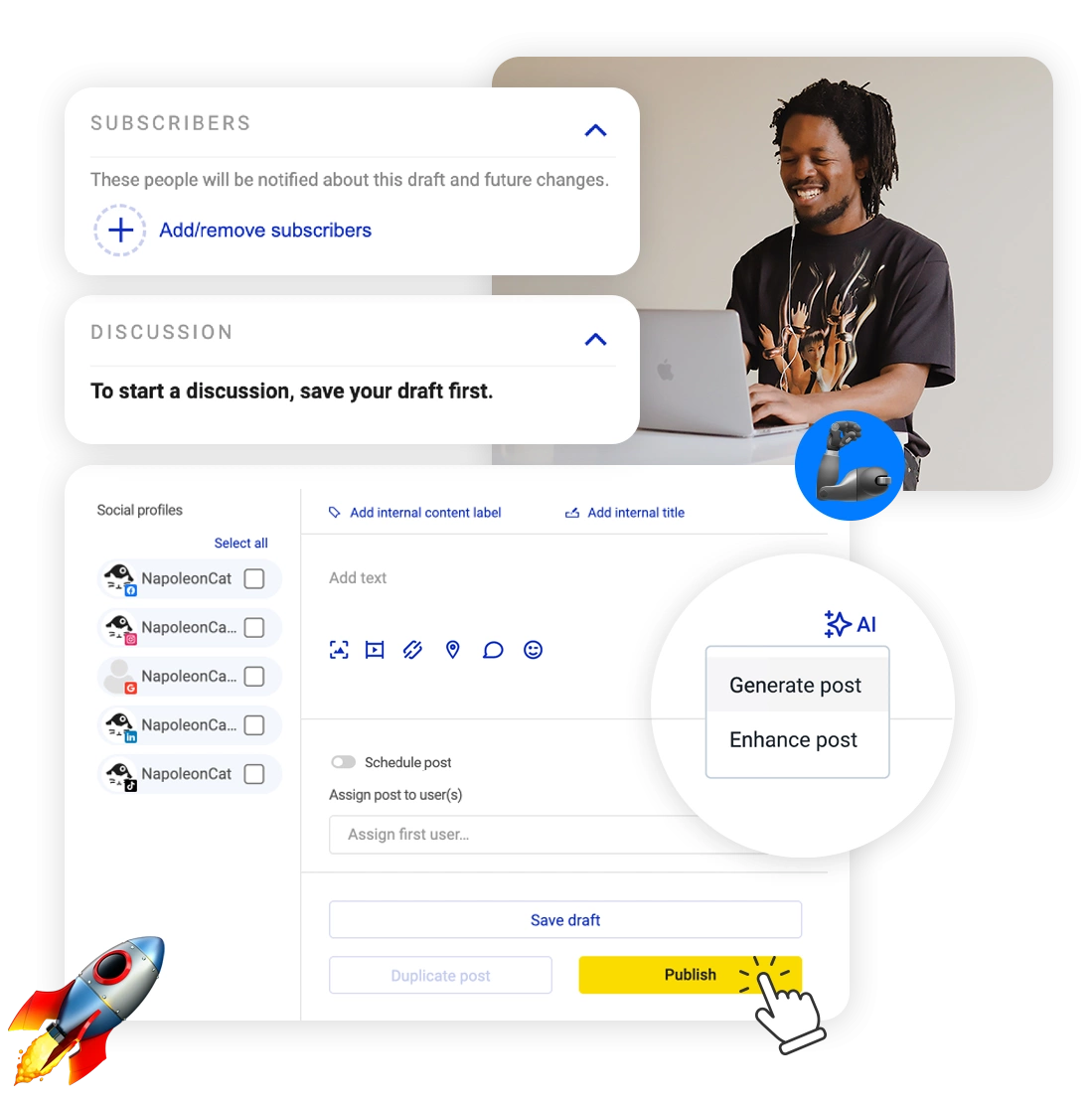

Cross-network social media scheduler for teams
Craft, schedule, and automatically publish unlimited number of posts to all your Facebook, TikTok, X (Twitter), Instagram, LinkedIn, and Google My Business accounts – with an all-in-one social media tool.
2. Hootsuite
Best for: big social operations with approvals, permissions and a compliance officer.
Hootsuite is the tool your CMO has heard of, and it’s genuinely strong once you’re running a lot of accounts across a lot of departments. In June 2026 it renamed the whole product line, so the publishing side is now called Perch and the inbox is Nest. Same software underneath – new signage.
The catch is the maths. Standard is $99 per user per month billed annually with zero seats included, so a four-person team is $4,752 a year before anyone connects an eleventh social account. Its trial also caps you at 10 to 20 posts a day and switches bulk scheduling off, so you can’t really stress-test it – which tells you something.
The numbers: $99, $199 and $399 per user/mo, all billed annually. No free plan, 14-day trial, no card. Full breakdown in our guide to Hootsuite pricing, and if the per-seat bill is the sticking point, NapoleonCat is a Hootsuite alternative that bundles the whole team into one plan.
3. Buffer
Best for: one person, a few channels, and no appetite for a sales call.
Buffer has the most honest free plan on this list and the simplest paid one. You pay per channel, not per person, which flips the usual maths: your whole team can use it, and adding a colleague costs nothing. Ten channels on the Team plan is $120 a month no matter whether that’s one of you or eleven.
It’s a publisher, though – not a suite. There’s no client workspace, no white-label reporting on the entry tier, and the listening is thin next to Agorapulse or Sprout. Also worth knowing: first-comment scheduling is paid-plan only, and it doesn’t work on posts that publish by reminder.
The numbers: Free forever with 3 channels, 10 queued posts per channel and 1 user. Essentials from $6 per channel/mo, $5 billed yearly. Volume pricing drops to $1 per channel above 51.
4. Later
Best for: planning a grid, not running a service desk.
Later is where visual-first brands go. Grid preview, Link in Bio, best-time-to-post, and a genuinely nice mobile experience. If Instagram and TikTok are 80% of your job, it fits.
Three things trip people up. Later prices by “social set”, which is one profile per network, not eight of whatever you like – so a brand that only uses Instagram and TikTok still pays for a set of eight. And Later doesn’t support X at all. It’s also worth noticing where the company’s attention has gone: the navigation now leads with influencer marketing and affiliate tools, and scheduling sits underneath.
The numbers: Starter $18.75/mo billed yearly (1 user, 1 social set, 30 posts per profile per month). Growth $37.50, Scale $82.50. No free plan, 14-day trial.
5. Sprout Social
Best for: the report you have to present to people who don’t work in social.
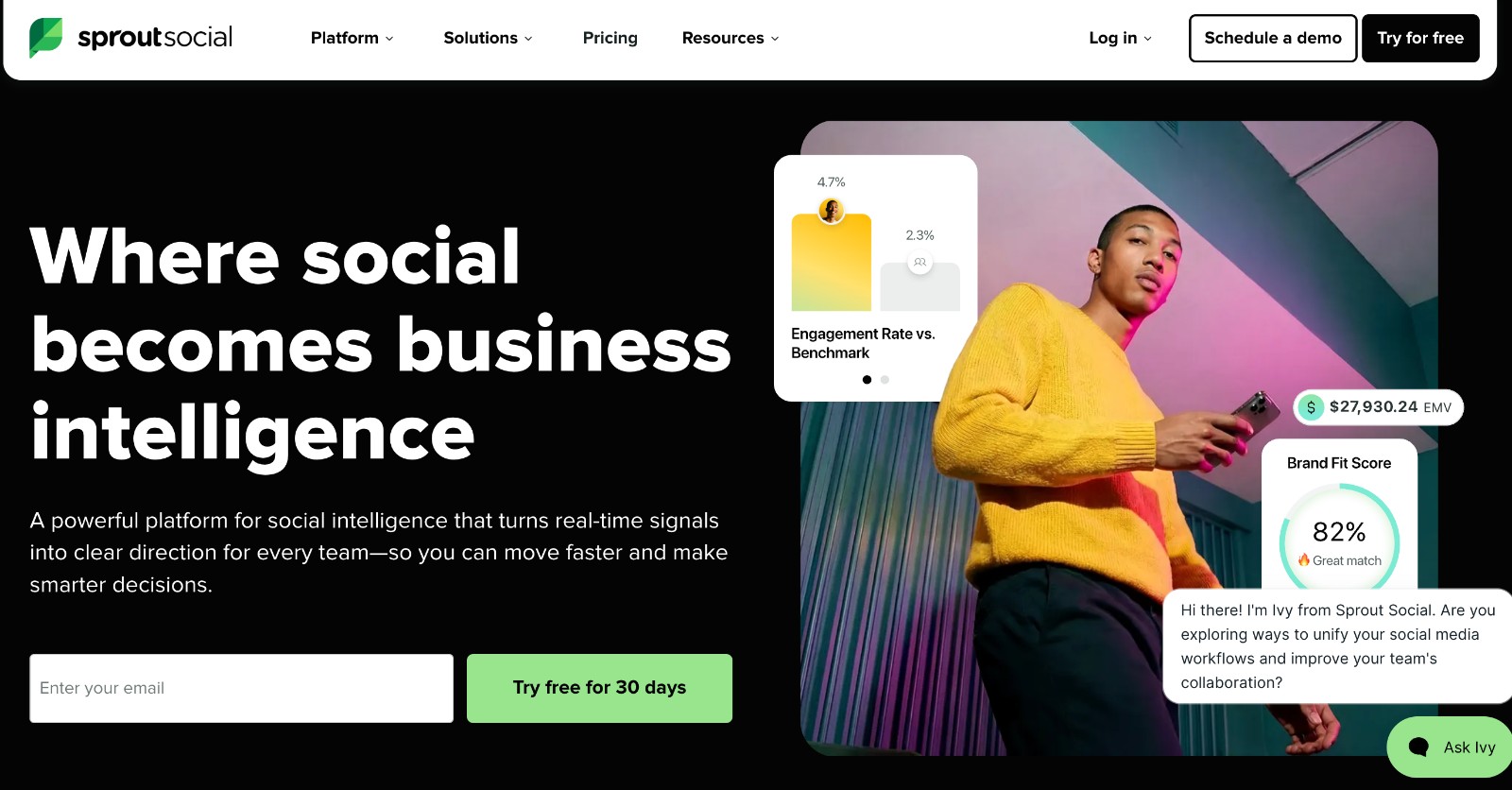
Nobody buys Sprout for the scheduler. They buy it for the reporting, the listening and the review management, and the scheduling comes along for the ride. It’s very good at making social legible to a board – and that is worth money to the right buyer.
You pay for that. Essentials is $79 per seat per month annually with no seats included, Standard is $199, and both cap you at five social profiles. Three people on Standard is $597 a month – before a single add-on. As of July 2026 there’s also a second meter: every user gets 100 Trellis AI credits a month, and more costs $28 per user/mo on annual billing.
The numbers: $79 / $199 / $299 / $399 per seat/mo annually. No free plan, 30-day trial, no card. Our full Sprout Social pricing breakdown has the add-ons.
6. Agorapulse
Best for: an inbox-led team that wants ROI attribution without an enterprise contract.
Agorapulse is the closest thing on this list to NapoleonCat’s shape: publishing plus a real inbox plus moderation rules, with a Social ROI report wired to Google Analytics.
Two facts you’ll find wrong almost everywhere else. Its free plan is gone – retired on 6 July 2026 – and Agorapulse’s own pricing FAQ still says you can “keep using the free plan for as long as you need”. You can’t. And every self-serve tier caps at 10 social profiles, Standard through Advanced, shared across the whole account. Agorapulse publishes no price for going past ten – only a quoted Custom plan.
The numbers: Standard $79 per user/mo annually, $99 monthly. Professional $119. Advanced $149. 30-day trial, no card. See also our Agorapulse pricing guide.

7. SocialBee
Best for: evergreen content that should keep going out without you rewriting it.
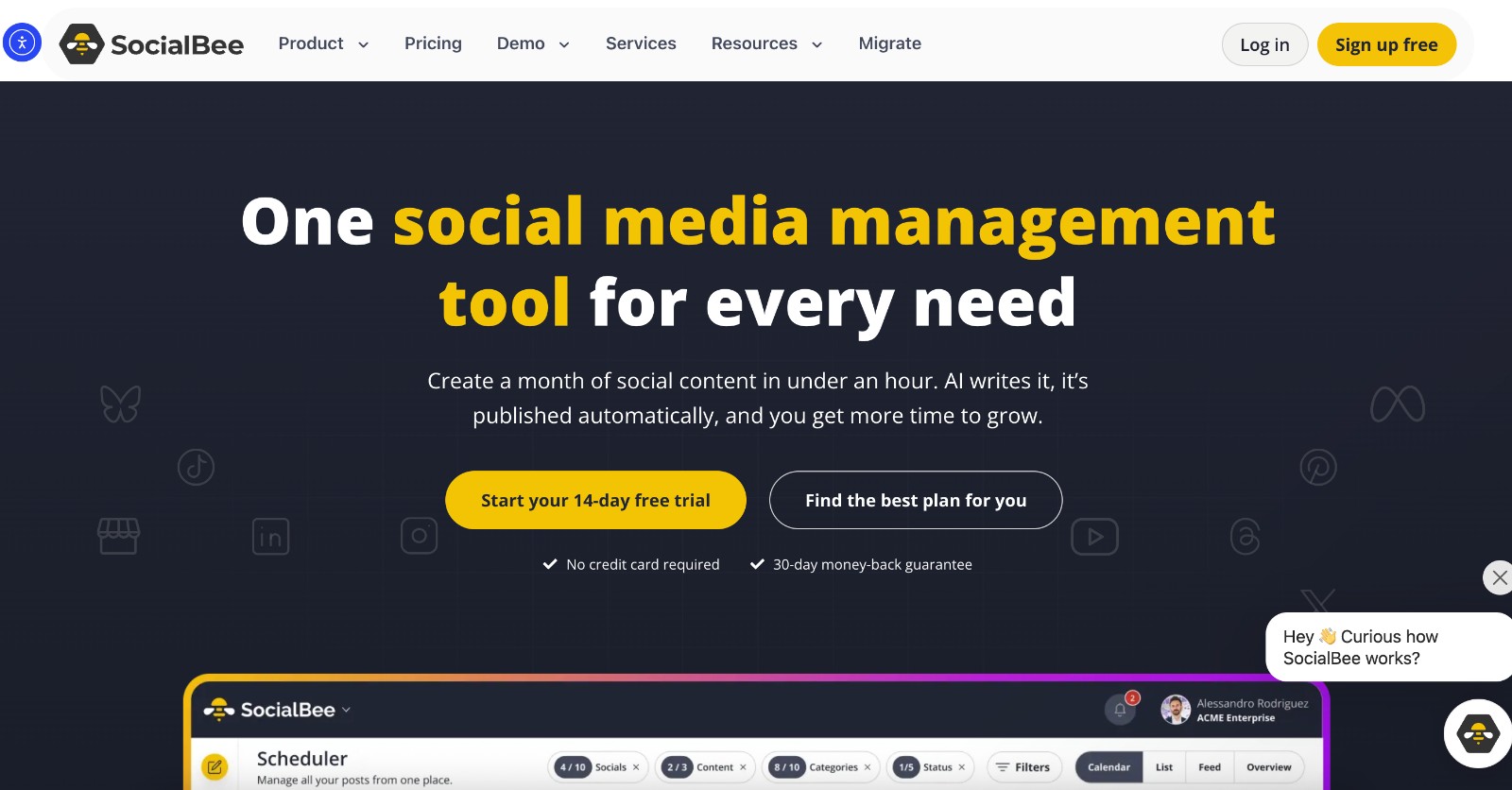
SocialBee’s category-and-queue model is the thing it does that nothing else here does as cleanly. You sort posts into buckets, set a schedule per bucket, and it cycles your library forever. For a blog with a back catalogue, that’s a lot of free reach – for work you already did.
The wall is the seat count. Bootstrap and Accelerate are hard-capped at one user, with no option to buy a second. Want a second person? That’s Pro at $82.50 to $99 a month. There’s also a promotional banner still live on their pricing page advertising a discount that expired on 10 June.
The numbers: Bootstrap $24.20/mo billed annually ($29 monthly), 5 profiles, 1 user. Accelerate $40.80. Pro $82.50 with 3 users. 14-day trial of Pro, no card.
8. Metricool
Best for: the cheapest credible way to schedule and measure several brands at once.
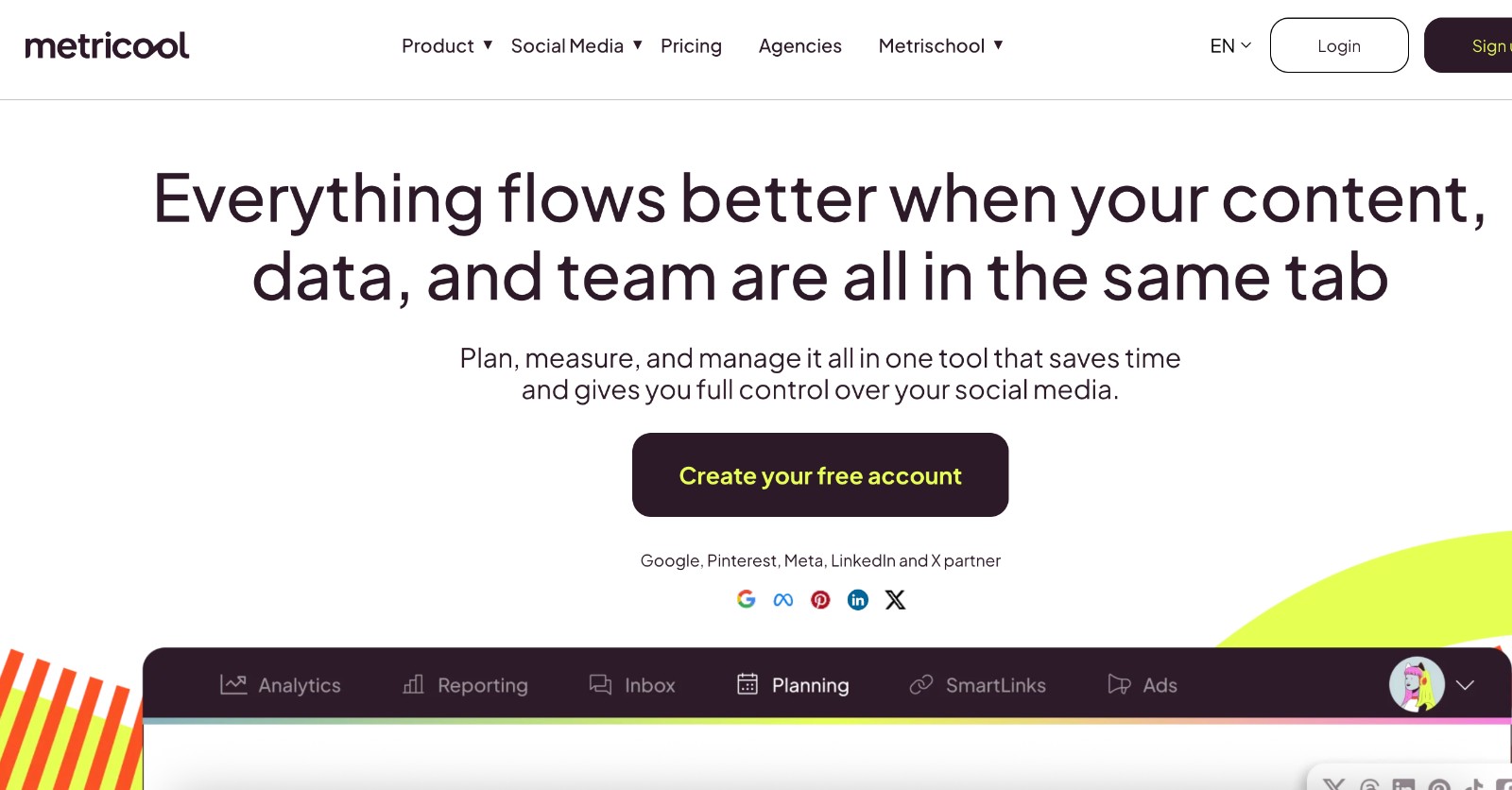
Metricool bills per brand, and a brand is one profile on each supported network. Five brands is $20 a month on annual billing, which is remarkable value if you’re an agency with a lot of small clients or a franchise with a lot of locations.
Two things to budget for. X is never included – it’s a per-account add-on that doubled to $10 a month per connected account on 13 July 2026 – and the Starter plan has no team members, no roles and no approvals at all. Collaboration starts at Advanced – so a solo plan really is solo.
The numbers: Free forever with 1 brand, 20 scheduled posts a month, and no LinkedIn or X. Starter from $20/mo annually for 5 brands. Advanced from $53/mo for 15 brands with unlimited team members.
9. Planable
Best for: getting a nervous client to approve a post without teaching them a new app.
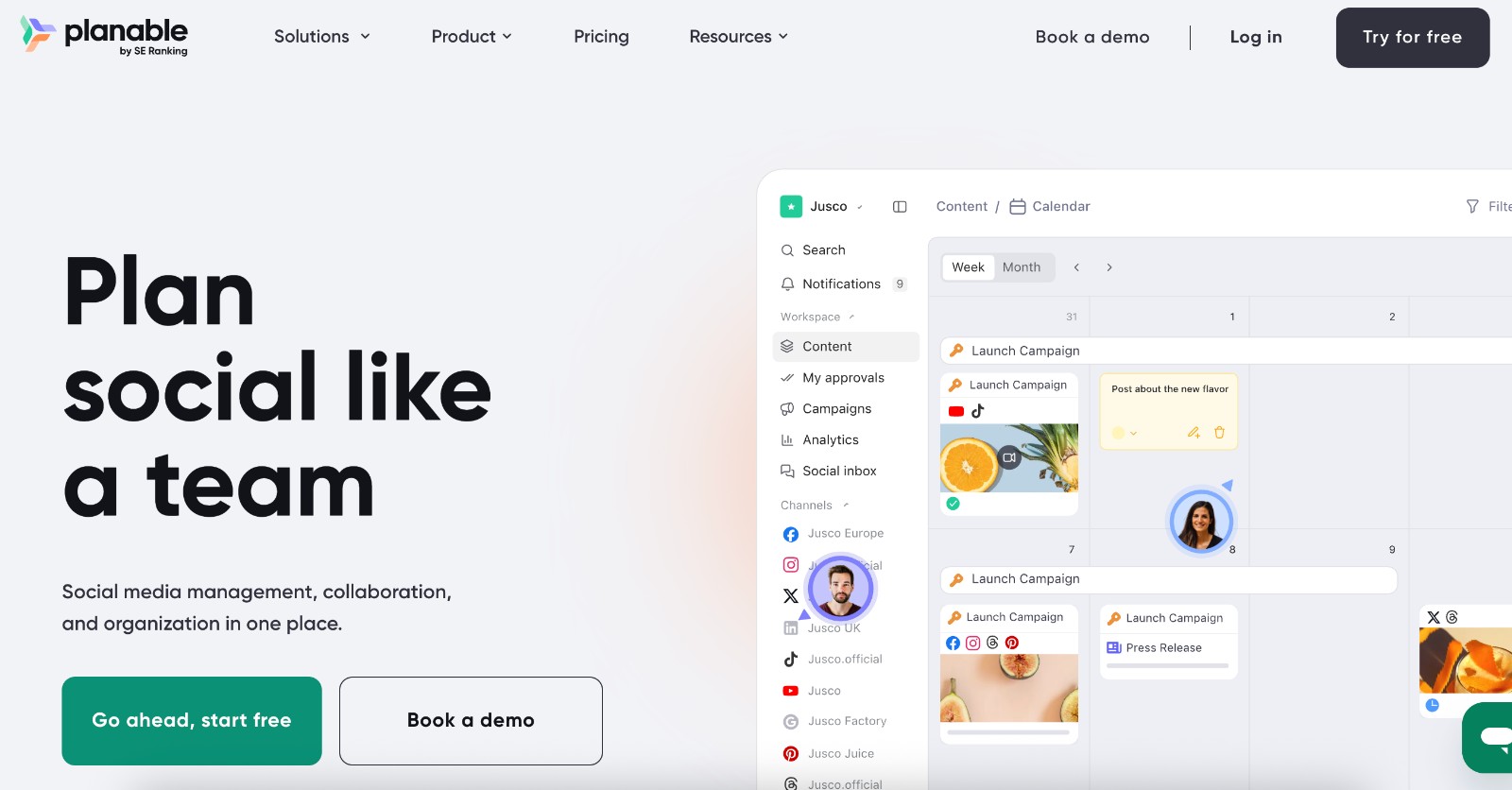
Planable’s whole personality is approvals. Content renders exactly as it’ll look live, reviewers comment inline, and multi-level sign-off chains are built in – rather than bolted on.
The reason agencies like it is the billing: per workspace, unlimited users. You can put every client, every reviewer and the legal team in there – without paying per head. Just know that Basic gives you 60 posts per workspace per month and throttles X to one tweet per 24 hours, and that both analytics and the social inbox are paid add-ons on every tier, Enterprise included.
The numbers: Free for your first 50 posts, no time limit, no card. Basic $33 per workspace/mo billed yearly ($39 monthly), 4 social pages. Pro $49 ($59 monthly), 10 pages.
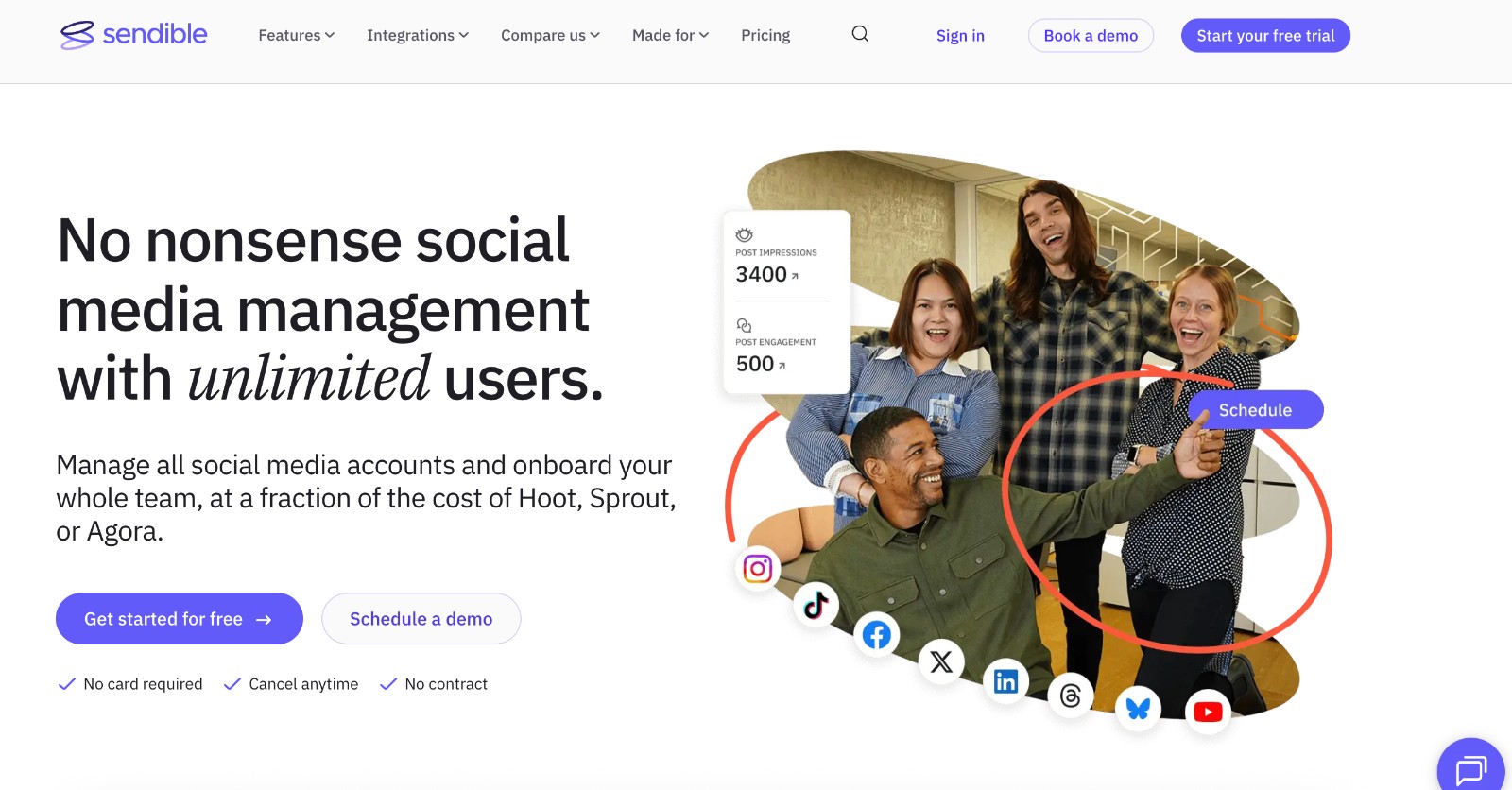
10. Sendible
Best for: an agency that has done the per-seat maths and had enough.
Sendible sells against seat pricing directly, and its economics back it up: unlimited users on every plan, client workspaces, and Client Connect so clients authorise their own accounts instead of emailing you passwords.
You buy capacity in workspace blocks of six profiles, so a brand with eight profiles pays for twelve – a rounding error at Core, less funny at Elite. And a warning about anything you read elsewhere: Sendible rebuilt its entire plan lineup on 18 August 2026, replacing Creator and Traction with Core, Plus, Premium, Elite and Enterprise. Any comparison published before that date is describing plans that no longer exist.
The numbers: Core $29.75/mo billed yearly ($35 monthly), 1 workspace, 6 profiles, unlimited users. Plus $84.15 ($99 monthly), 3 workspaces, 18 profiles. 14-day trial, no card.
11. CoSchedule
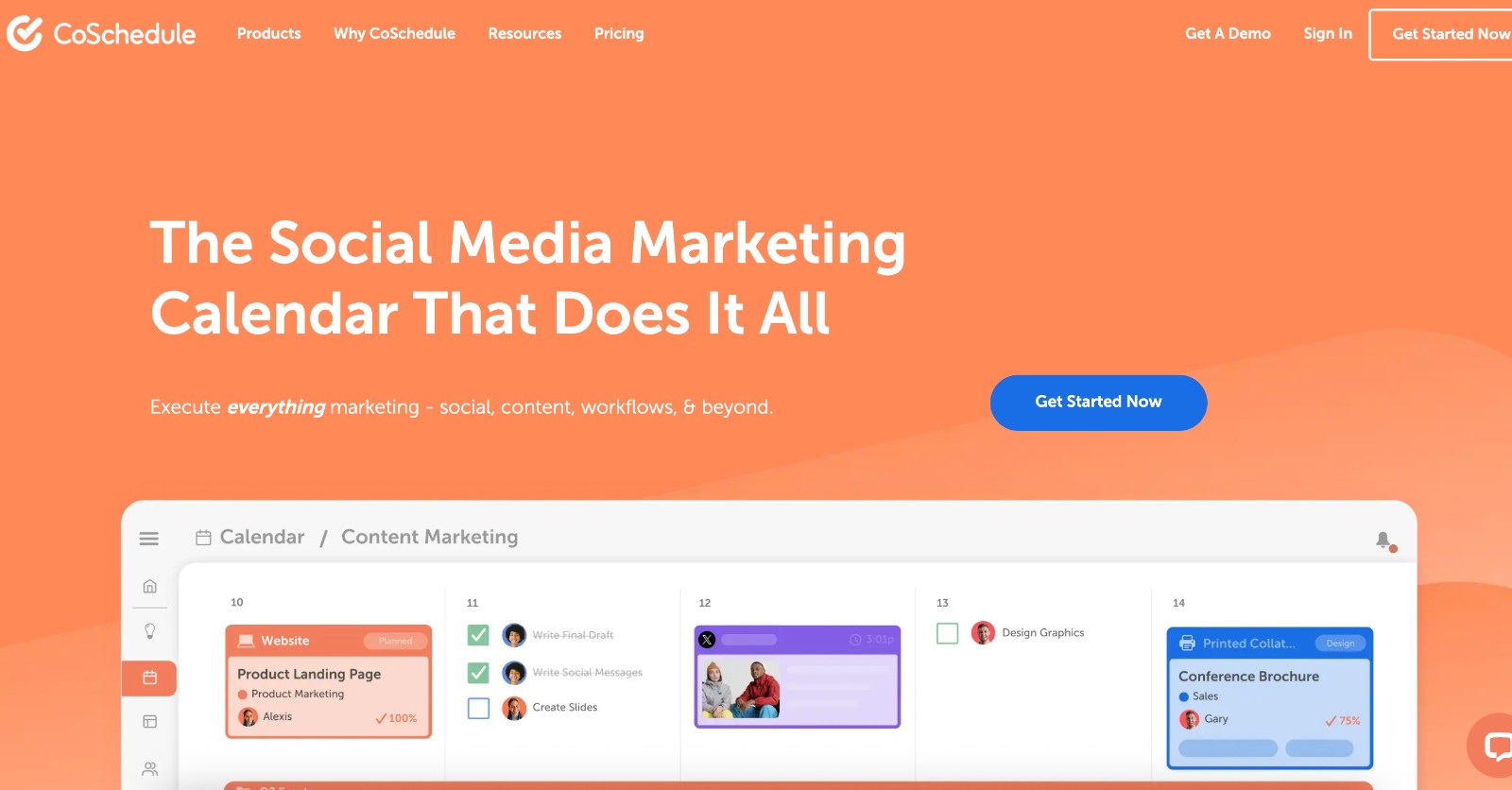
Best for: teams where social is one lane of a much bigger marketing calendar.
CoSchedule competes with a project manager plus a scheduler – not with Buffer. Campaigns, Kanban, intake forms, custom project types, and social sitting inside all of it.
Two costs hide in the footnotes. X profiles are excluded from every base plan and billed at $16 per profile per month, which is nearly the price of a seat. And the self-serve tiers stop at three users, so a fourth person means a “call us” plan. The free calendar is real but tiny: one profile, 15 scheduled messages, no collaboration.
The numbers: Free forever, 1 user, 1 profile, 15 posts. Social Calendar $19 per user/mo billed annually ($29 monthly), 3 users max, 3 profiles. Agency Calendar $59 ($69 monthly).
12. Loomly
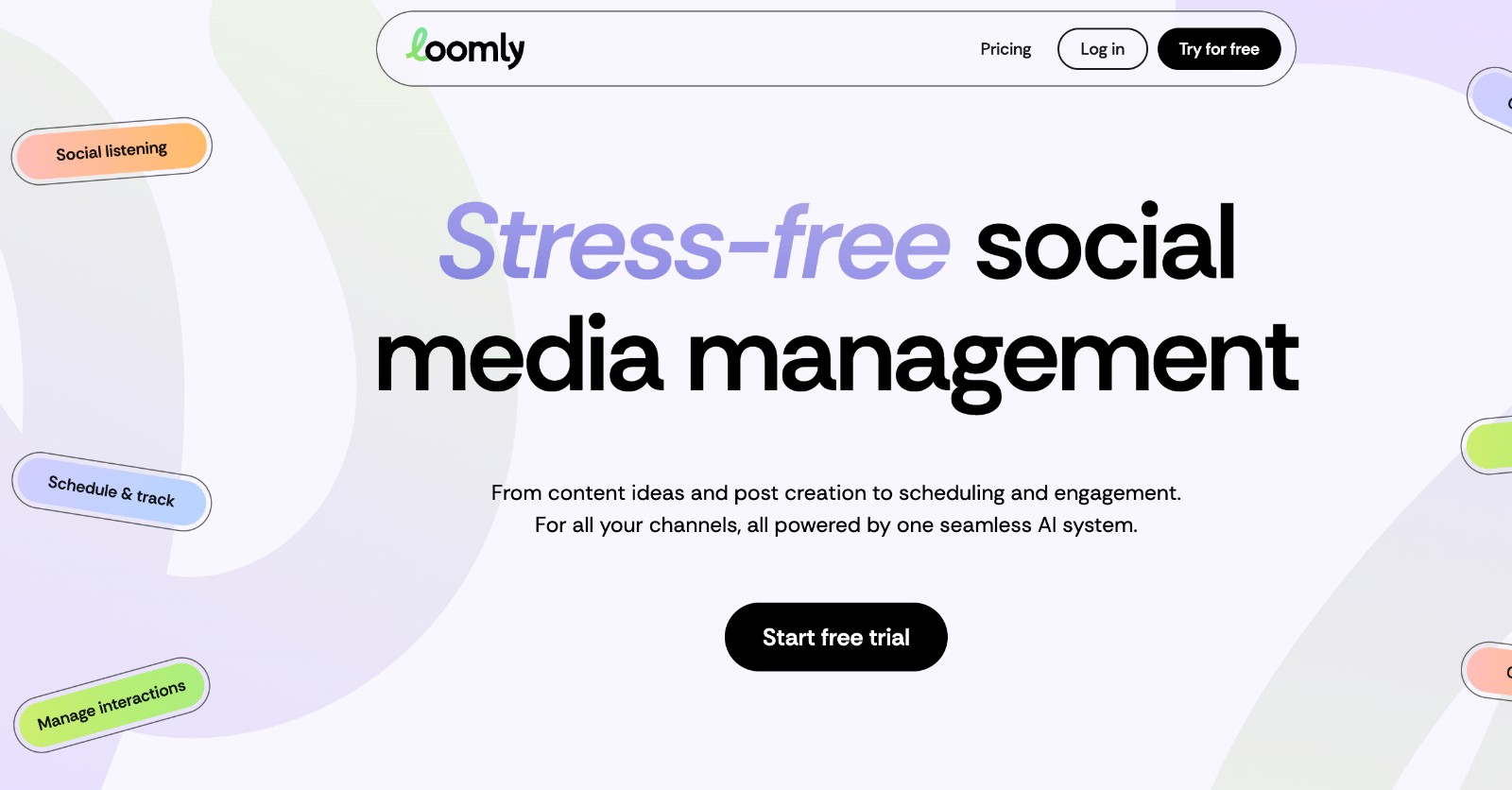
Best for: a small in-house team that wants the tool to nudge them on what to post.
Loomly builds post ideas and format guidance into the composer, which is genuinely useful when the person running social is also running three other things – as they usually are. Approval flows are solid.
Worth knowing before you commit: Loomly has been a Bending Spoons property since January 2025, and its marketing blog hasn’t published since that month. The help centre is being maintained (articles updated in May 2026) and signup works, so it isn’t going anywhere obvious, but the quiet is worth noticing – and factoring in. There’s also a free plan documented in the help centre that doesn’t appear on the pricing page and “might not be available for all users”.
The numbers: Starter $49/mo billed yearly ($65 monthly), 12 social accounts, 3 users. Beyond $249/mo yearly, 60 accounts, unlimited users. Free trial with no card, length not stated anywhere on the page.
13. Statusbrew
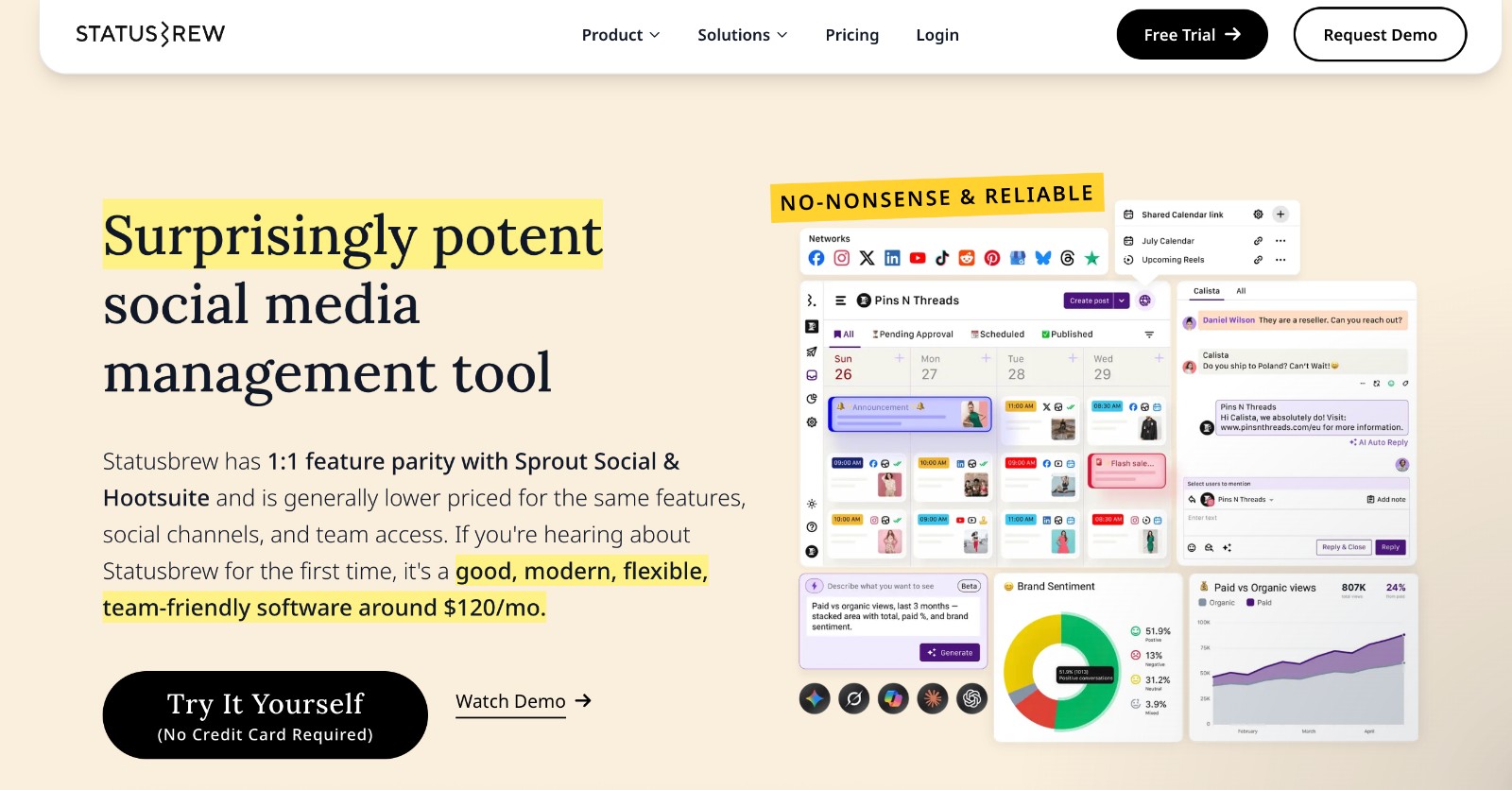
Best for: high-volume comment moderation with an audit trail behind it.
Statusbrew’s Rule Engine is the closest competitor to what NapoleonCat does with automated moderation, and its governance and audit logging is genuinely enterprise-grade.
It’s also, quietly, the best-documented tool on this entire list when things go wrong. Statusbrew is the only one of the 20 that publicly commits to retrying failed posts automatically, and the only one that lets you route a “post failed” alert to email, Slack or in-app on a rule. That sounds boring – until a token expires on a Friday.
One thing to check: its own meta description advertises “pricing starts at $129/month”, which is the Standard annual rate. The actual entry plan is Lite.
The numbers: Lite $69/mo billed annually ($89 monthly), 1 user, 5 profiles. Standard $129 annually ($179 monthly), 3 users, 10 profiles. Extra users $35/mo, extra profiles $15/mo. 14-day trial, no card.
14. Zoho Social
Best for: anyone already paying Zoho for something else.
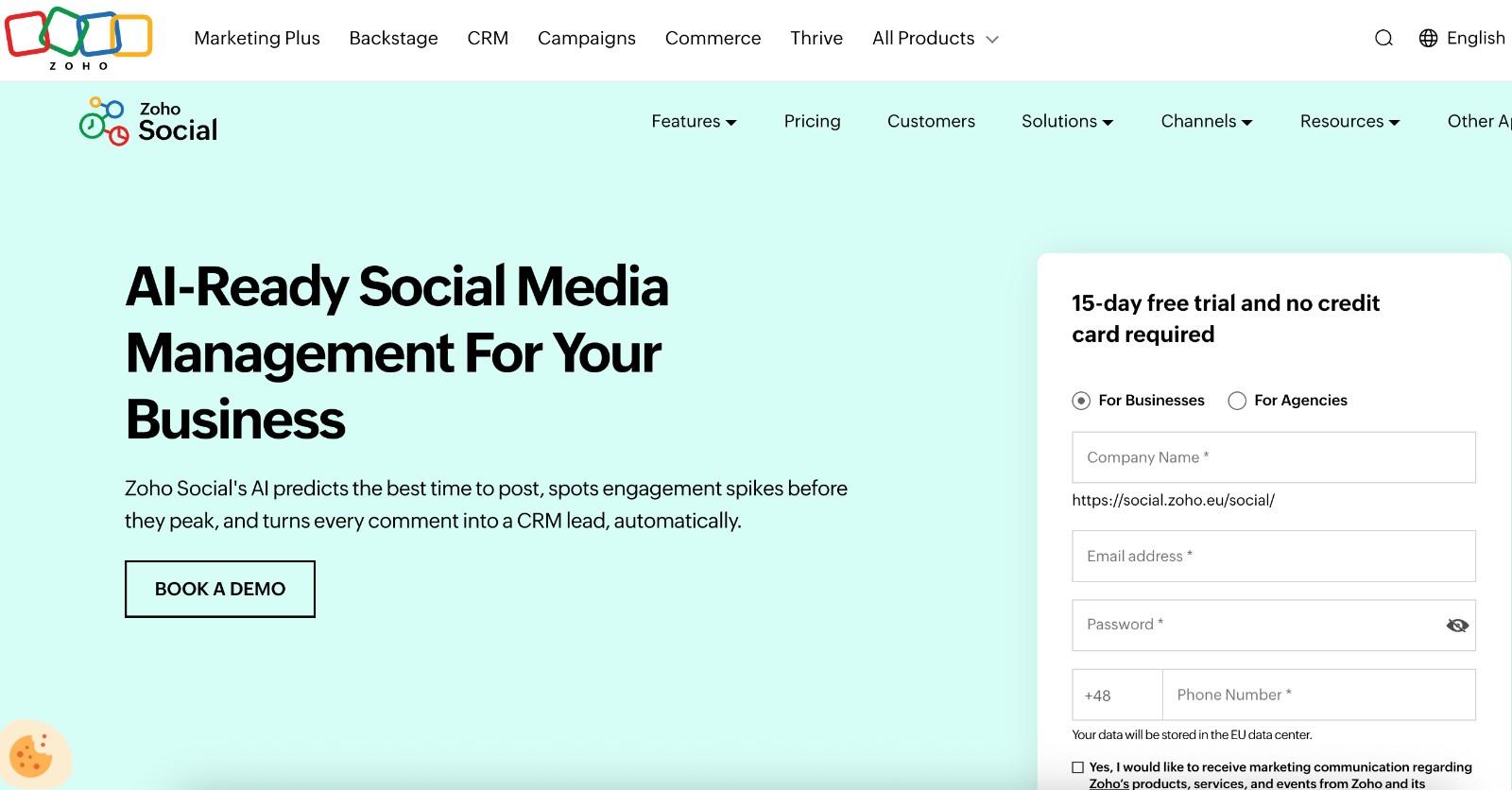
At $10 a month on annual billing, Zoho Social is one of the cheapest paid plans here for a whole brand, and the free tier is permanent rather than a trial in disguise. If your CRM is already Zoho, social leads land where your sales team can see them.
The compounding starts above one brand. Extra brands are $14.50 to $19.50 a month each, extra team members $10 to $12, and an agency setup gets expensive fast unless you jump to the Agency tier. Zoho also publishes the only consolidated per-network posting-limit table we found anywhere, which is more transparency than most vendors manage.
The numbers: Free forever, 1 brand, 6 channels, 1 member. Standard $10/mo billed annually ($15 monthly). Professional $30 ($40 monthly). 15-day trial, no card.
15. Publer
Best for: paying for exactly the number of accounts you actually run.
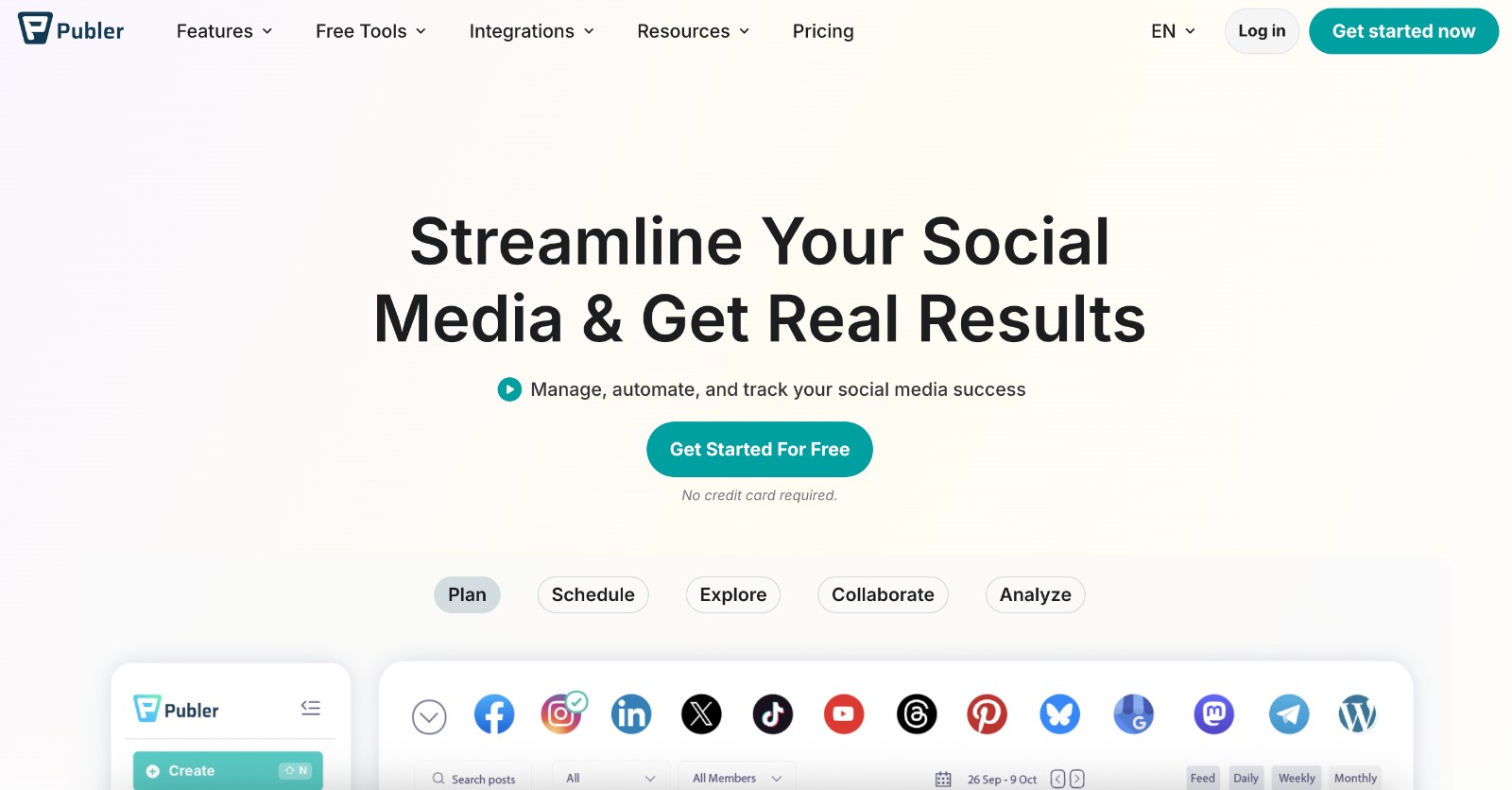
Publer’s pricing is the most à la carte on this list: you pay per social account and per team member, and every tenth account or member is free. Connect three accounts, pay for three – no rounding up to the next tier. It also has the widest network list here, including Telegram, Mastodon, Bluesky and WordPress.
Fair warning about the price. Publer’s pricing page calculates the number in your browser from a slider, so it won’t show you a figure until you configure one, and their help centre quotes “$5 per month for 1 social account” without saying whether that’s the monthly or the yearly rate. Two months are free on annual billing, so there are two numbers and only one is published.
The numbers: Free forever, 3 accounts (not X), 10 scheduled posts each, 1 user. Professional from $5/mo per the help centre, extra accounts $4, extra members $2. First-comment scheduling starts at Professional.
16. Pallyy
Best for: a good-looking Instagram plan on the smallest possible budget.
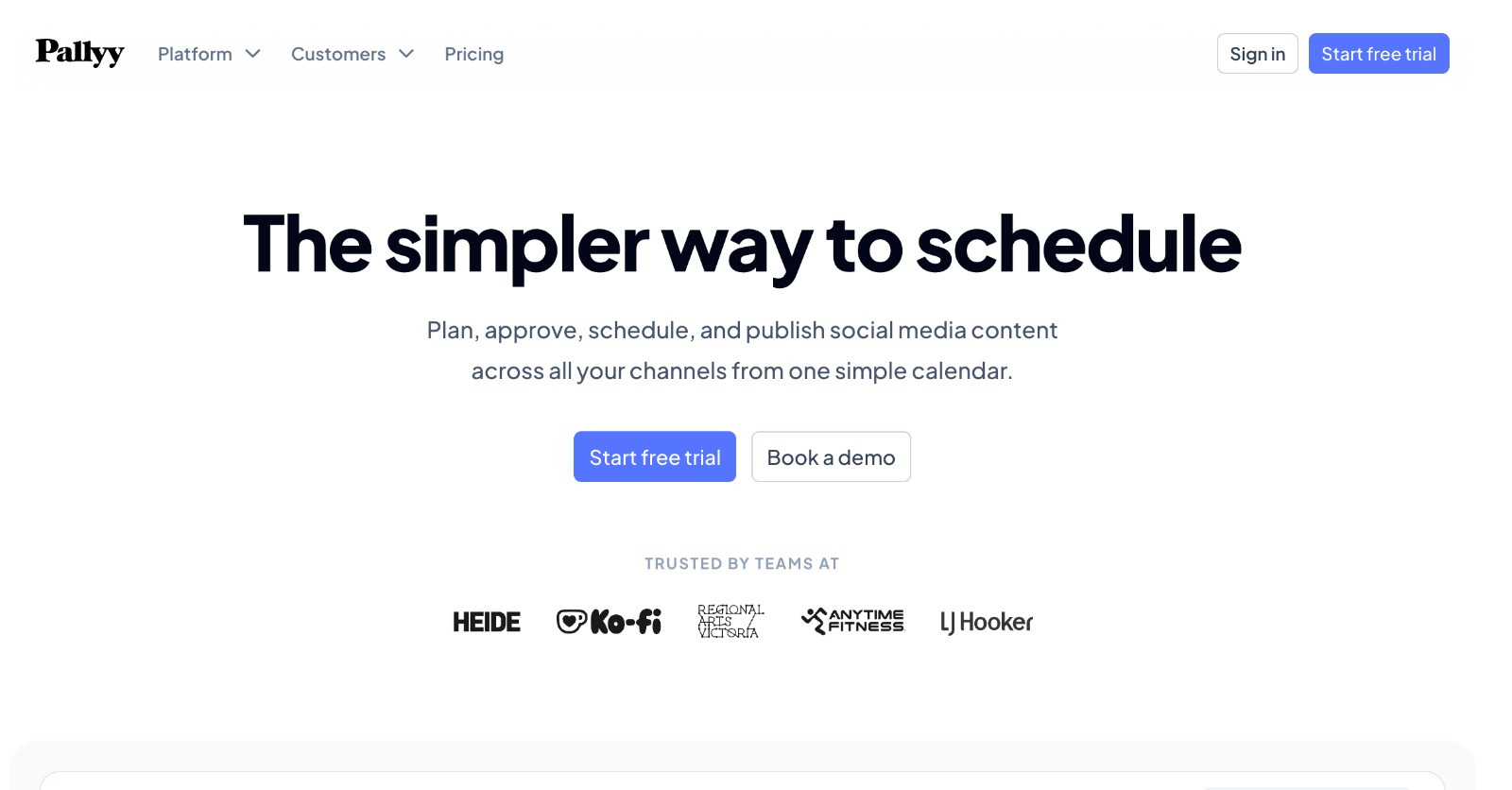
Pallyy is cheap, tidy – and better designed than most tools twice its price. The bio-link builder is included rather than sold separately, and the calendar is a pleasure.
The ceiling arrives early. Starter and Pro are capped at one user with no paid seat add-on at all – you cannot buy a second person onto them. The next step is Agency at $99 a month. Starter also allows two accounts per social set and 20 posts a month, which goes quickly.
The numbers: Free forever, 1 account, 15 posts/mo. Starter $15/mo ($140/yr). Pro $25/mo ($240/yr), 11 accounts, unlimited posts. Agency $99/mo. 14-day trial on paid plans.
17. Iconosquare
Best for: measuring Instagram and TikTok properly, with scheduling attached.
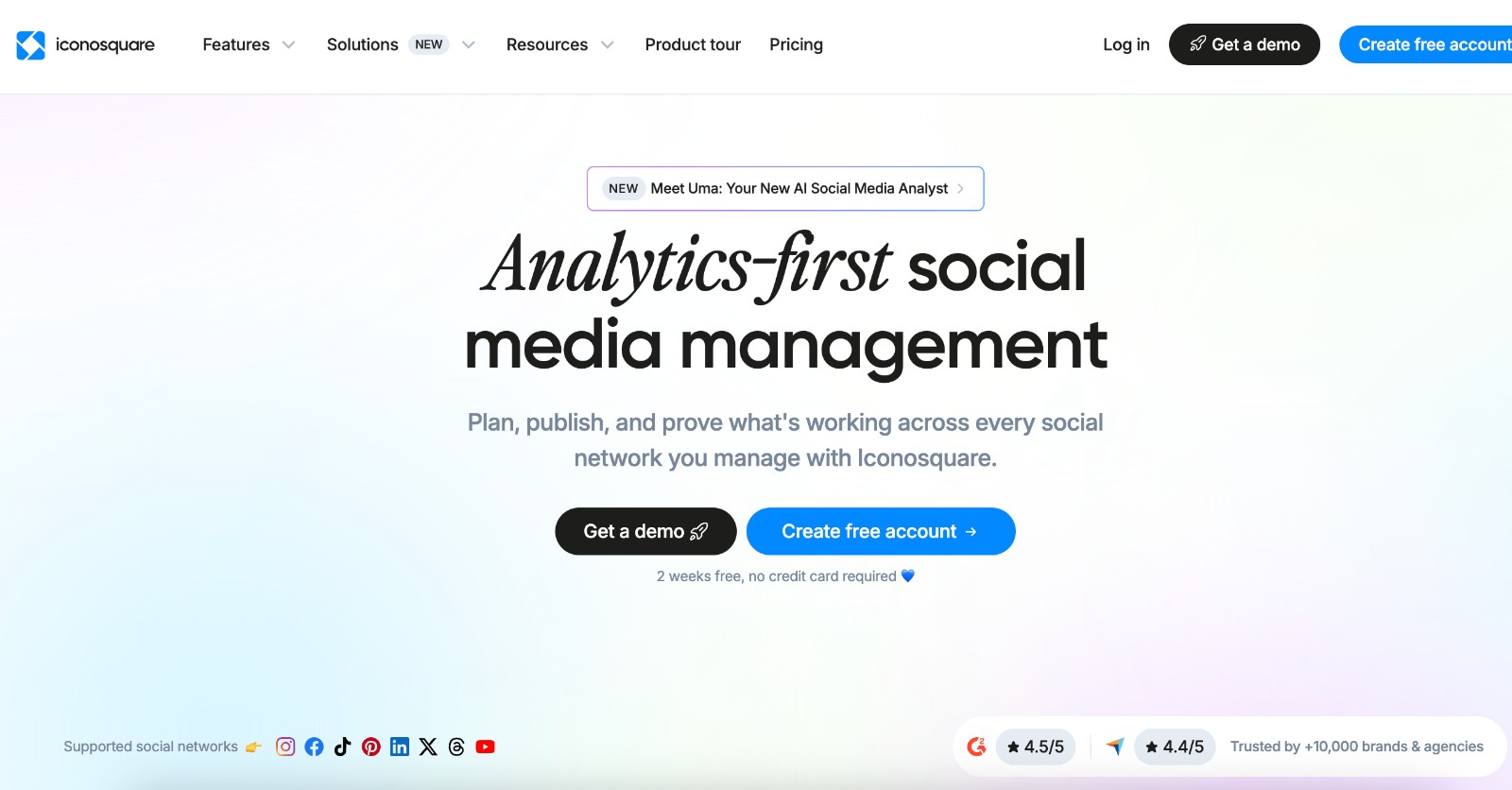
Iconosquare is an analytics product that also publishes – in that order. The benchmarking and competitor data are the reason to buy it, and if you’re being asked to explain performance rather than just produce posts, it earns its price.
Two things to note. It was acquired by Positive on 19 May 2026, and while it’s still sold standalone and still taking customers, the announced direction is a deeper integration into another platform. And publishing is capped hard: 25 posts, Stories or Reels per day, with no stickers, no links and no music on auto-published Stories.
The numbers: Free forever, 2 profiles, 1 user, 10 posts a month per profile. Launch €33/mo billed yearly, 5 profiles, 1 user. Extra users €16/mo each. 14-day trial, no card. Prices render in euros and vary by region.
18. MeetEdgar
Best for: an evergreen queue that runs itself, without paying per person.
MeetEdgar invented the category-and-timeslot recycling model, and it still does it well. Its seat policy is unusually generous: up to 20 team members on any plan at no extra cost.
Its pricing page contradicts itself, so read carefully. The monthly cards badge both plans with “Save 10% / $299 billed annually”, but the annual card for the EDGAR plan says $499. The $499 is the one that reconciles with the $41.58 a month they also show. Its trial is the only one here that requires a card and charges you automatically when the 30 days end.
The numbers: Eddie $29.99/mo, or $299/yr ($24.92/mo), 5 accounts. EDGAR $49.99/mo, or $499/yr ($41.58/mo), 25 accounts. 30-day trial, card required.
19. HubSpot
Best for: tying a scheduled post to a deal in the pipeline.
HubSpot’s social tool isn’t sold separately, and it isn’t in the Starter tier either. Social scheduling begins at Marketing Hub Professional, which is $800 a month on annual commitment with three core seats included, additional seats from $45, up to 50 connected accounts, and a mandatory one-time onboarding fee of $3,000.
If you’re already on Marketing Hub Professional, turning social on is free and the attribution is genuinely excellent, because publishing lives on the same contact record as email, ads and deals. If you are not, this is the most expensive way to schedule a post on this list by roughly a factor of ten.
The numbers: Professional from $800/mo annually ($890 monthly) plus $3,000 onboarding. Enterprise $3,600/mo plus $7,000 onboarding. Free tools exist but include no social publishing.
20. ContentStudio
Best for: an agency that wants flat pricing and no per-seat tax.
ContentStudio’s Agency Unlimited plan is $99 a month on annual billing for unlimited workspaces and unlimited users, which is the best team economics in this list at that price. Content discovery and automated recycling are strong too.
The trade is add-on creep. Social listening is $99 a month on top, white-label $50, extra users $10 each, extra accounts $5 each, extra workspaces $10. And there is no free plan at all, just a seven-day trial, which is short for a tool you’re meant to build a workflow in.
The numbers: Standard $19/mo billed annually ($29 monthly), 5 accounts, 1 user, 1 workspace. Advanced $49 ($69 monthly). Agency Unlimited $99 ($139 monthly). 7-day trial, no card.
Cross-network social media scheduler for teams
Craft, schedule, and automatically publish unlimited number of posts to all your Facebook, TikTok, X (Twitter), Instagram, LinkedIn, and Google My Business accounts – with an all-in-one social media tool.
What a social media scheduler can actually auto-publish (and what still needs your thumb)
Here’s the section every other guide skips. Some of what you want to schedule cannot be scheduled by any tool on earth, because the social network’s own API forbids it. That isn’t a feature gap in the software you’re about to buy. It’s a wall – and every vendor is standing at the same one.
When a tool says it “schedules Instagram Stories”, check which of these two things it means:
- Auto-publish. The post goes out on its own while you’re asleep.
- Reminder publishing. The tool sends a push notification to your phone at the scheduled minute, and you finish the post by hand inside the native app.
Both are useful. Only one of them is scheduling – and the difference shows up at 7am on a Saturday.
What the platforms actually allow
| Network | Goes out on its own | Needs a human, every time |
|---|---|---|
| Single images, videos, Reels, carousels up to 10 items, plain photo or video Stories | Stories with any sticker: link, poll, question, countdown, location, music. Also filters, shopping tags and branded content tags | |
| Text, links, photos, videos, Reels, Page Stories | Groups. Meta removed the Groups API entirely on 22 April 2024, so no tool can post to a Group any more | |
| TikTok | Videos and photo posts, if the tool passed TikTok’s audit | Custom or licensed audio, some effects. An unaudited tool can only post privately |
| Text, images, video, documents, articles, polls, to both company Pages and personal profiles | Sponsored carousels, native newsletters | |
| YouTube | Video uploads, including vertical short-form | There is no “Shorts” setting in the API. YouTube decides what counts as a Short from the aspect ratio and length, not from anything your tool sends |
| Image pins, video pins | Idea Pins | |
| Google My Business | What’s New, Event and Offer posts with a photo and a button | Multi-image posts, video |
The Instagram Stories line is the one that catches people. Meta’s own documentation is blunt about it: publishing stickers such as link, poll and location “is not supported”. So if link stickers in Stories are how you drive traffic, no scheduler will do that for you unattended. Every tool that appears to is really sending you a notification – and hoping you’re awake.
Sources: Meta content publishing · TikTok Content Posting API · LinkedIn Posts API · YouTube videos.insert
There’s a daily ceiling too, and nobody agrees what it is
Bulk scheduling has a limit, and Instagram’s is the messiest number in this whole industry. On a single page of Meta’s own documentation, one section says accounts are limited to 100 API-published posts in a rolling 24 hours and another section says 50. Later tells its users 50. Hootsuite tells its users 25. Iconosquare caps you at 25 by policy.
They can’t all be right – and only one of them is checkable. If you’re planning a launch day with a lot of posts, don’t trust any published figure, including ours: the only live answer comes from Instagram’s own content publishing limit endpoint, which good tools check for you.
The free plans, honestly sorted
“Free social media scheduling tools” is one of the most searched phrases in this category, and it means four completely different things. Here’s the honest version.
| What “free” actually means | Tools | The catch |
|---|---|---|
| Permanent free tier you can genuinely work in | Buffer, Metricool, Publer, Zoho Social, Pallyy, Iconosquare | Real caps: 1 to 6 accounts, 10 to 20 posts a month, one user, and usually no LinkedIn or X |
| Free until you’ve used it up | Planable | First 50 posts free, no time limit, then you pay |
| Free calendar, near-zero publishing | CoSchedule | 1 profile, 15 scheduled messages total, no team collaboration |
| A trial wearing a free plan’s clothes | NapoleonCat, Hootsuite, Later, Sprout Social, Agorapulse, SocialBee, Sendible, Statusbrew, Loomly, MeetEdgar, ContentStudio | 7 to 30 days. MeetEdgar is the only one that asks for a card and charges you when it ends |
One correction worth making, because it’s repeated almost everywhere: Agorapulse no longer has a free plan. It was retired on 6 July 2026. Agorapulse’s own pricing FAQ still tells you that you can “keep using the free plan for as long as you need”, which is how the error keeps spreading.
If you want a free social media scheduler and you’re one person with three channels, Buffer is the honest answer – no catches. If you want a free one and you’re a team, there isn’t one, and any list that says otherwise is counting a trial.
What a five-person team actually pays
Every comparison table on the internet shows you a starting price. None of them work out the real total. So here’s ten channels and five people, at list price, on the cheapest plan that takes five people:
| Tool | How it bills | 5 users, 10 channels |
|---|---|---|
| Buffer Team | Per channel, unlimited people | $120/mo |
| NapoleonCat | Per plan, users and profiles in published steps | $149/mo for 5 users and 10 profiles |
| Planable Basic | Per workspace, unlimited people | $33/mo per workspace (4 pages each) |
| Sendible Core | Per plan, unlimited people | $29.75/mo per workspace (6 profiles each) |
| CoSchedule | Per seat, max 3 | Not possible on self-serve, 4th seat needs a sales call |
| Agorapulse Standard | Per user | $395/mo |
| Hootsuite Standard | Per user | $495/mo |
| Sprout Social Standard | Per seat | $995/mo, and Standard still caps at 5 profiles |
That’s an eight-fold spread between Buffer and Sprout Social, and more than thirty-fold across the whole table. Not because of features – because of how they count you.
This is the single most useful question to ask a vendor before you buy: does the second person cost me the full price again? On Sprout and Hootsuite the answer is yes, from the first extra head. On Buffer, Planable and Sendible it’s no. On NapoleonCat a team comes included in the plan, and going from two people to five costs $60 a month rather than another $99 a head.
What happens when a scheduled post fails
Your token expires on a Friday afternoon. A week of scheduled posts silently doesn’t go out – and the calendar still shows them as sent. When do you find out?
We looked for a public answer from all 20 tools. Ten of them publish nothing at all about retry behaviour, failure alerts or requeuing. Of the ones that do:
- Statusbrew is the only tool here that says it retries failed posts automatically, and the only one that lets you route a “post failed” alert to email, Slack or in-app on a rule you set.
- Sprout Social documents mobile push, an in-app notifications drawer and a dedicated failed-posts stream.
- SocialBee offers an opt-in “email me when an item fails to post”, with manual retry.
- ContentStudio says plainly that automatic retry isn’t built yet.
- Later doesn’t document retries, but publishes the clearest list of why posts fail, right down to a missing camera roll permission on iOS.
If a 9am announcement matters to your business, ask the question in the trial. It won’t be on the pricing page – and that is exactly why it is worth asking.
How to choose a social media scheduler that scales with your team
Social media schedulers all look the same on a feature grid. They stop looking the same the moment you add a second person or a tenth profile. Five questions, in the order that actually saves money.
1. How does it count people? Per seat, per channel, per brand, per workspace, or per plan. This decides your bill more than any feature does, and it’s the thing you can’t change later without migrating.
2. Which of your networks does it truly auto-publish? Not “supports” – auto-publishes. If half your Instagram plan is Stories with link stickers, you’re buying a notification app.
3. Does it handle what happens after the post? A social media scheduling tool that publishes and walks away leaves you the comments, the DMs and the spam. Tools that combine scheduling with comment moderation collapse two jobs into one login.
4. Who has to approve things? If a client or a legal team signs off, you need real approval workflow and you need those reviewers not to cost a seat each.
5. What breaks at 10x? Profile caps arrive faster than user caps – always. Agorapulse stops at 10 profiles on every self-serve tier. Sprout and Hootsuite Standard stop at 5 and 10. Check the ceiling, not the floor.
Social media scheduling tools: your questions, answered
What is a social media scheduling tool?
It’s software that lets you write posts once, choose when they should go live, and publish them automatically across several social networks from one calendar. You’ll see the same thing sold as a social media posting tool, a social media scheduling app, a post scheduler, or lumped in with social media scheduling platforms and publishing tools – it’s the same job under different names. The good ones add a shared calendar, approval steps, analytics on what worked, and a way to handle the replies afterwards.
How do I schedule social media posts?
Connect your accounts to a scheduling tool, write the post once, tailor the version for each network, then pick a date and time and hit schedule. From there the tool publishes for you. Scheduling social media posts in weekly batches rather than one at a time is where the real time saving lives – most teams find an hour on Monday replaces twenty interruptions across the week.
What’s the best free social media scheduler?
For one person with up to three channels, Buffer’s free plan is the most usable: 3 channels, 10 queued posts per channel, no time limit and no card. Metricool’s free tier is better if you care about analytics, though it excludes LinkedIn and X. For a team, there is no genuinely free option, only trials.
Is there a free social media post scheduler?
Yes, though every one of them is capped. Buffer, Metricool, Publer, Pallyy, Zoho Social and Iconosquare all run a permanent free tier, and all of them cap you at somewhere between one and six accounts and somewhere between 10 and 20 posts a month. If you want to schedule social media posts free of charge at any real volume, or with more than one person involved, you’ll hit a wall inside a fortnight.
Can I plan social media posts on a calendar?
That’s what most people actually buy these tools for. Every option on this list has a calendar view, but they differ a lot in whether the calendar is shared, colour-coded by campaign, and editable by more than one person at a time. If social media calendar tools are the main thing you need, check that drafts, labels and assignments are on the plan you’re pricing, not two tiers up.
Can you schedule Instagram Stories?
Plain photo and video Stories, yes, and a good tool will publish them automatically. Stories with a link sticker, poll, question box, countdown, music or location cannot be auto-published by anyone, because Instagram’s API doesn’t allow it. Tools work around this by sending you a push notification so you can finish the Story in the app.
Can you schedule Instagram Reels and carousels?
Yes, both auto-publish properly. Carousels max out at 10 items, and every image gets cropped to match the first one, so plan the first slide carefully. Alt text works on regular image posts but not on Reels or Stories.
How do you schedule a TikTok?
Connect the account to a scheduling tool that has passed TikTok’s developer audit, then schedule as normal. If the tool hasn’t been audited, TikTok forces every post it publishes to private, which is the single most common reason scheduled TikToks appear to vanish.
Can I post to all my social media at once?
Yes, and it’s the main reason to use a scheduler at all. The better tools also let you tailor each version so LinkedIn doesn’t get the TikTok caption. Just remember each network has its own daily posting limit.
How many posts can I schedule in a day?
It depends on the network, and the published numbers contradict each other. Instagram is somewhere between 25 and 100 depending on who you ask, Facebook around 40, LinkedIn around 50, YouTube 20, TikTok as few as 15. If bulk scheduling is central to your workflow, test it during the trial rather than trusting a table.
Do scheduled posts get less reach?
There’s no evidence that any network penalises a post for arriving through an API – none of the vendor experiments have found one. What does hurt reach is posting at a time nobody’s online, which is the thing scheduling fixes. Use your own analytics to find your best times rather than a generic chart.
What’s the cheapest social media scheduler?
Zoho Social at $10 a month on annual billing is the cheapest paid plan here, and Buffer at $6 per channel is the cheapest if you run very few channels. But cheapest per month and cheapest for your team are different questions: a $19 per-seat plan beats a $99 flat plan until your fourth person joins, and then it stops.
Which social media scheduler is best for a small business?
One that includes a couple of users without charging per head, covers the networks you actually use, and handles comments as well as posts. Small teams get hurt most by per-seat pricing, because the second and third person double and triple the bill on tools like Hootsuite and Sprout Social.
What’s the best social media scheduler for agencies?
Look for per-workspace or per-client billing rather than per seat, client approval flows, and white-label reporting. Sendible, Planable and ContentStudio are all built around that model. NapoleonCat’s Workspaces separate clients and permissions while keeping moderation in the same place.
Do I need approval workflow?
If anyone other than the person writing the post has to see it first, yes. Look for whether reviewers count as billable users. On Planable and Sendible they don’t, which is the difference between three seats and thirteen.
Cross-network social media scheduler for teams
Craft, schedule, and automatically publish unlimited number of posts to all your Facebook, TikTok, X (Twitter), Instagram, LinkedIn, and Google My Business accounts – with an all-in-one social media tool.