

Save hours on social, every day.
Automate moderation and replies, schedule posts, and pull reports - all in one tool.
Table of Contents
- Meta One makes Facebook a subscription product
- AI Mode turns Facebook into a search destination
- Facebook ad performance now comes from Meta ranking models
- Meta Business Agent moves into an enterprise stack
- AI creative tools arrive in the feed
- Messaging turns into a paid channel
- Reels supply runs through Meta own editing app
- Ad comment moderation becomes a paid media problem
- Facebook trends FAQ
Facebook trends in 2026 are not really about formats. They are about how much of the platform Meta has handed to its own AI, and how much of it now sits behind a subscription. Both of those changed in the second half of the year, and neither shows up in the trend lists that were written in January.
Everything below is taken from Meta own announcements rather than secondhand roundups, with the dates and the figures Meta published alongside them. Where a trend has a practical consequence for a page owner, it is written under the trend rather than left implied.
- Meta One makes Facebook a subscription product
- AI Mode turns Facebook into a search destination
- Facebook ad performance now comes from Meta ranking models
- Meta Business Agent moves into an enterprise stack
- AI creative tools arrive in the feed
- Messaging turns into a paid channel
- Reels supply runs through Meta own editing app
- Ad comment moderation becomes a paid media problem
- Facebook trends FAQ
Key Takeaways
- Facebook is now a paid product. Meta One launched in September 2026 with Facebook Plus at 3.99 dollars a month and business plans running from 14.99 to 499 dollars a month.
- Search happens inside the app. AI Mode answers questions using public posts from Groups and Reels, so discovery no longer starts on a feed.
- Ad results come from Meta models, not your targeting. Meta credits its GEM ranking model with a 3.5 percent lift in ad clicks on Facebook.
- Messaging is a revenue line. Paid messaging on WhatsApp passed a 2 billion dollar annual run rate, and website to message ads grew more than 50 percent year over year in the US.
- Reels supply is engineered. Almost 10 percent of daily Reels views come from content made in Meta own Edits app.
- More reach means more comments. Every trend here increases the volume landing under your posts and your ads, which is a moderation cost before it is a content opportunity.
Meta One makes Facebook a subscription product
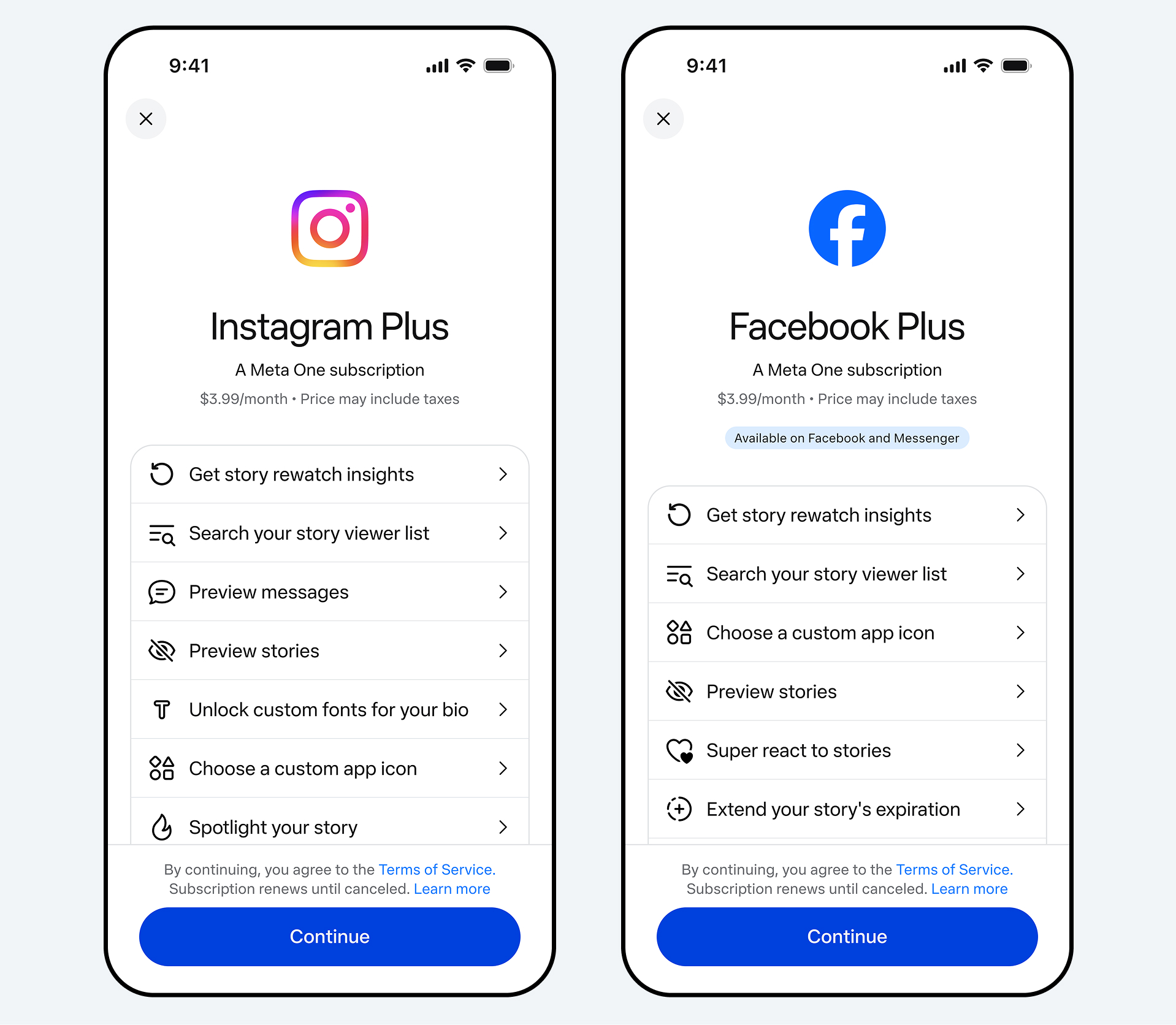
On 15 September 2026 Meta launched Meta One, a subscription that spans Facebook, Instagram, WhatsApp and Meta AI. The free experience stays as it was. What sits behind the paywall is higher AI usage, extra expression features and a set of professional tools. Meta reported 15 million subscriptions and trials at announcement, across more than 50 features.
For Facebook specifically, Facebook Plus covers Messenger customisation, more Reels insights and super reactions extended to Reels and feed posts. The Reels insights part is the one worth noting, because analytics that used to be uniform are now partly a paid tier.
| Plan | Price per month | What it covers |
|---|---|---|
| Facebook Plus | 3.99 dollars | Messenger customisation, more Reels insights, super reactions on Reels and feed |
| Instagram Plus | 3.99 dollars | Single product plan |
| WhatsApp Plus | 2.99 dollars | Single product plan |
| Core bundle | 7.99 dollars | Bundle across the apps |
| Premium bundle | 19.99 dollars | Bundle across the apps |
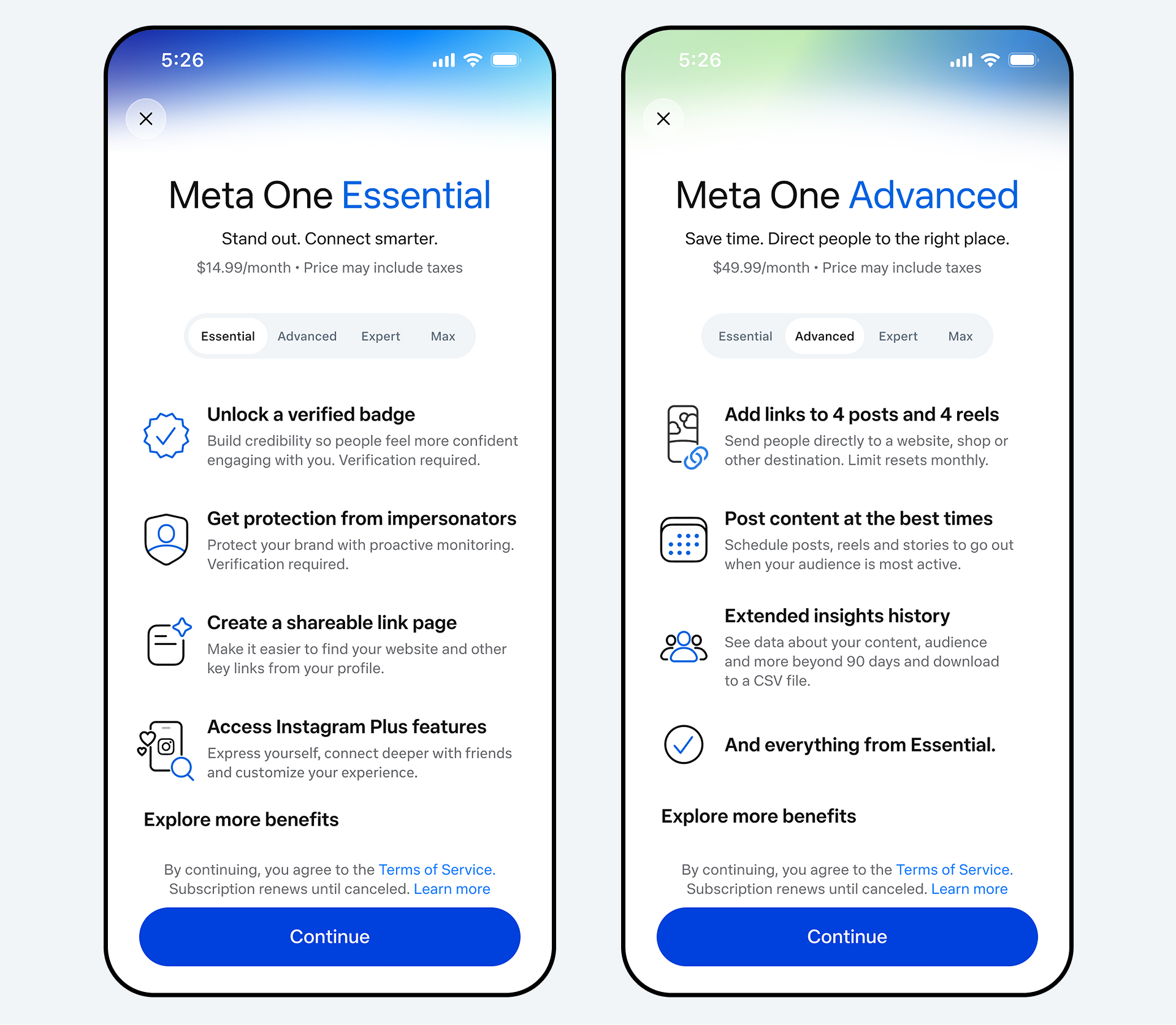
| Creator and business: Essential | from 14.99 dollars | Enhanced profiles, professional publishing |
| Creator and business: Advanced | from 49.99 dollars | Adds team access and analytics |
| Creator and business: Expert | from 149 dollars | Advanced analytics, wider Meta Business Agent access |
| Creator and business: Max | from 499 dollars | Full professional tier |
Source: Meta newsroom, September 2026. Plans are listed as available globally.
What to do about it
- Price the Expert or Max tier against what you already pay for scheduling and analytics, because some of it overlaps.
- Check whether the Reels insights you report on monthly are in the free tier or the paid one before you build a report around them.
- Assume competitors on a business plan get publishing and analytics features you do not.
AI Mode turns Facebook into a search destination
In June 2026 Meta added AI Mode, a search experience inside the app that answers questions using what people post publicly across surfaces like Groups and Reels, rather than returning a list of links. That moves a slice of discovery away from the feed and towards a question box.
The practical effect is that public Group activity and Reels captions become retrieval material. Content locked in private Groups does not feed it.
What to do about it
- Write captions and Group posts so they answer a question in plain words, because that is the text being drawn on.
- Keep a public Group if you run one privately for reach reasons, since private content is outside this.
- Track which questions people actually ask your page and answer them publicly once.
Facebook ad performance now comes from Meta ranking models
Meta January 2026 performance update credits its ranking systems rather than advertiser targeting for most recent gains. Its Generative Ads Recommendation Model, GEM, doubled GPU training capacity in Q4 2025 and is credited with a 3.5 percent lift in ad clicks on Facebook. Meta Lattice, which consolidated Facebook Stories and other surfaces into one model, is credited with a 12 percent increase in ads quality metrics.
Attribution moved too. Meta incremental attribution model is reported to have produced a 24 percent increase in incremental conversions against standard attribution, and reached a multi billion dollar annual run rate seven months after launch.
What to do about it
- Give the system room. Narrow manual audiences work against models trained on much longer behaviour sequences.
- Compare incremental attribution against your standard reporting before you judge a campaign, because the two now disagree by design.
- Budget for creative volume rather than targeting labour, since that is where the remaining human advantage sits.
Meta Business Agent moves into an enterprise stack
On 28 September 2026 Meta announced the Meta Enterprise Platform, a business division built around the Muse agent, Meta Business Agent, Muse API and Muse Code. Chirantan Desai, previously chief executive at MongoDB, was appointed to lead it. Meta has not published pricing for the platform.
For a page owner the relevant piece is Meta Business Agent, which also appears as a benefit inside the paid business tiers of Meta One. Agent driven replies are moving from an experiment to something Meta sells.
What to do about it
- Decide now which questions you are willing to let an agent answer on your behalf, and which need a person.
- Write the answers down in one place, because every agent is only as good as the source it reads.
- Watch for pricing, since an unpriced enterprise product usually lands above what a small team plans for.
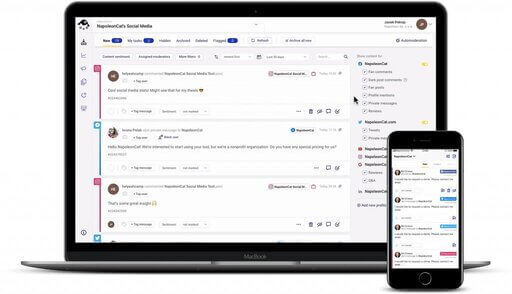
Manage and automate conversations across all your socials
Manage and automate social media interactions on Facebook, Instagram, TikTok, LinkedIn, YouTube, and Google My Business – with an all-in-one social media tool.
AI creative tools arrive in the feed
Also in June 2026, Meta put generative editing directly into everyday posting. AI Photo Presets let people change clothing, hair and accessories, with a sports variant that drops a team jersey onto a photo from the AI edit icon in stories. Profile pictures gained a restyle option with a wardrobe setting. Camera roll sharing suggestions picked up collage cutout templates and transition effects that assemble a montage ready to post.
None of this is a brand feature, which is the point. It resets what an ordinary post looks like, and a polished studio asset now reads as the odd one out in a feed of restyled selfies.
What to do about it
- Shoot fewer set pieces and more material that survives being edited casually.
- Expect user photos of your product to arrive restyled, and decide whether you are comfortable resharing them.
- Keep one recognisable visual constant so your posts stay identifiable when the styling moves around them.
Messaging turns into a paid channel
Meta reported paid messaging on WhatsApp crossing a 2 billion dollar annual run rate in Q4 2025, website to message ads growing more than 50 percent year over year in the United States, and business AIs handling over a million weekly conversations in Mexico and the Philippines alone. The direction is consistent. Meta is monetising the conversation, not the impression.
For a Facebook page that means the reply is the product surface. A conversation that starts under an ad and moves to Messenger is now the path Meta is actively building for, which puts response time in the same bracket as creative quality. Teams handling that volume usually end up pulling comments and messages from every account into a single social inbox rather than working account by account.
What to do about it
- Measure first response time on Messenger the way you measure ad performance.
- Route ad driven conversations somewhere they can be answered, not into a shared login nobody owns.
- Write reply templates for the five questions that follow every campaign.
Reels supply runs through Meta own editing app
Meta says nearly 10 percent of daily Reels views come from content created in Edits, its own video creation app, and that its video generation tools reached a combined 10 billion dollar revenue run rate in Q4 2025. Reels supply is being manufactured with Meta tooling, and content made in that tooling appears to circulate well.
What to do about it
- Try Edits for a month against whatever you use now and compare reach on like for like posts.
- Do not rebuild a vertical video workflow around a third party editor without testing the native one first.
Ad comment moderation becomes a paid media problem
Put the previous seven together and the volume arriving under a Facebook page goes up, not down. AI ranking pushes reach wider than the audience you picked. Paid messaging invites replies. AI editing lowers the cost of posting for everyone, including people posting spam under your ads.
That lands as a moderation problem attached to media spend rather than a community management task. Comments under a running ad are shown to an audience you paid to reach, so anything hostile or fraudulent sitting there is being distributed at your own expense. This is why Facebook ad comment moderation tends to get treated as part of campaign setup rather than something handled afterwards.
What to do about it
- Check comments under every live ad daily, including dark posts that never appear on your page.
- Agree in advance what gets hidden and what gets answered, so nobody improvises during a spike.
- Track comment volume alongside spend, because they move together.
Facebook trends FAQ
What is the new Facebook trend today?
Day to day viral formats move too quickly for any article to stay current. The structural trends in 2026 are Meta One, AI Mode search, and Meta ranking models driving ad performance. Those set the conditions that individual formats appear inside.
How do you see what is trending on Facebook?
Facebook retired its Trending topics module in 2018 and has not replaced it. The closest equivalents now are AI Mode answers, which surface what people are posting publicly, and the search results for a hashtag or topic inside the app.
Are Facebook trends worth building content around?
Structural ones are, because they change what gets distributed and what costs money. Format trends are worth joining only when the format suits what you already sell, and they carry a moderation cost that is easy to forget when a post reaches beyond your usual audience.
Manage and automate conversations across all your socials
Manage and automate social media interactions on Facebook, Instagram, TikTok, LinkedIn, YouTube, and Google My Business – with an all-in-one social media tool.